
Requirements gathering is a crucial first step in any product development process. It involves thoroughly understanding the problems that must be solved and the goals that must be achieved with the product. Effective requirements gathering ensures that the product team has clarity on what needs to be built and why before design and development begin. It aligns stakeholders on the vision and validates that the product will solve real customer problems. Without clear requirements, product teams risk building solutions that don’t meet customer needs, resulting in wasted time and effort. This post will provide an overview of effetive requirements gathering, process and tips, for Product Managers to gather robust product requirements.
The Requirements Gathering Process
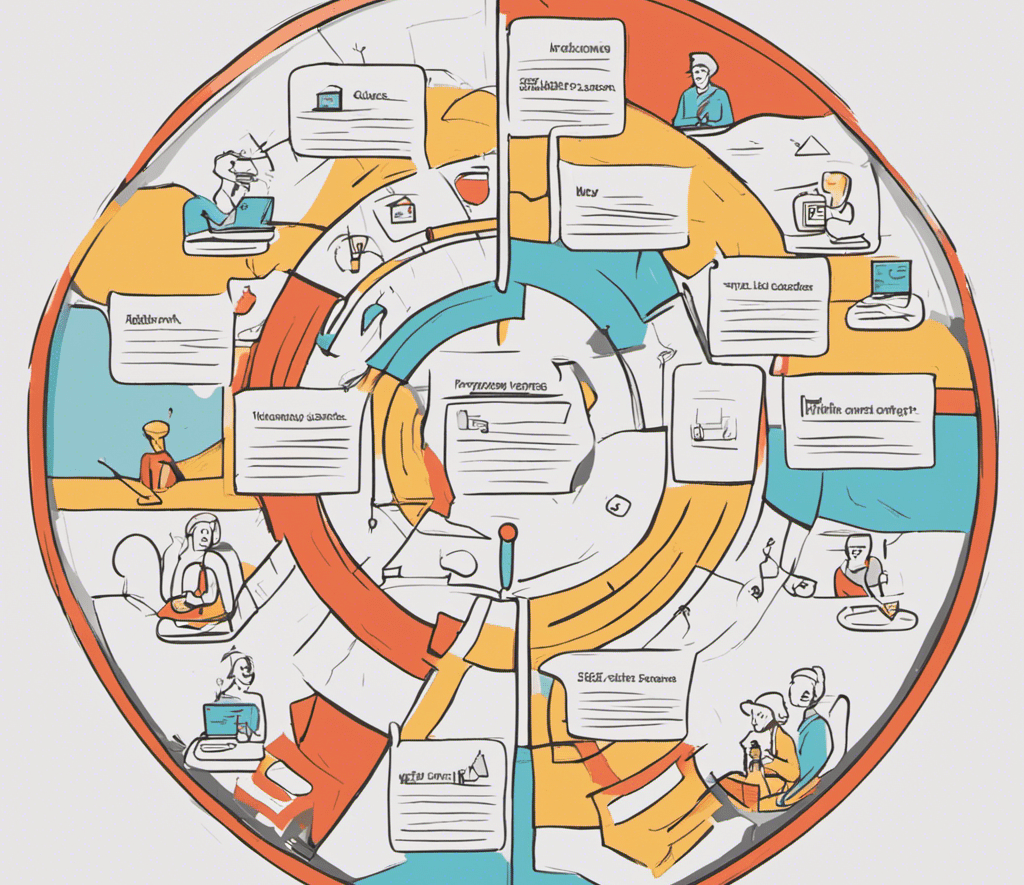
Requirements gathering follows a structured process with distinct phases, though it is iterative. As you learn more through research and stakeholder interviews, requirements will evolve. The key phases are:
Planning – Define the scope and goals for requirements gathering. Identify key stakeholders and create a plan for interfacing with them. Develop research plans.
Stakeholder interviews – Interview identified internal and external stakeholders to understand their needs, pain points, and desired outcomes. Ask probing questions and capture detailed notes.
User research – Conduct user research through surveys, focus groups, usability testing, observation studies, and other methods. Recruit representative users and gain empathy for their experiences. Observe how they currently solve problems.
Documenting requirements – Consolidate research findings into documented requirements. Capture user stories describing who the user is, what they need to do, and why. Define detailed acceptance criteria. Document all assumptions.
Validating requirements – Review requirements with stakeholders to ensure accuracy and alignment on priorities. Refine based on feedback.
This process is iterative because initial findings will reveal gaps and new stakeholders. Requirements should be continually validated through user testing and feedback. Keep an open mind and avoid making early assumptions. Let research and observation guide requirements. Document ongoing questions and uncertainties. By following a structured process, product managers can effectively gather unambiguous, validated requirements that set the product vision and team up for success.
Identify Key Stakeholders
Identifying key stakeholders is crucial in requirements gathering. Stakeholders include both internal team members and external customers/users who have an interest in the product.
Internal stakeholders can include product team members, engineering, UX designers, executives, sales, customer support, and more. They provide important perspectives on business goals, technical needs, and industry trends.
External stakeholders include target customers and users. Get a mix of segments, personas, and roles to understand diverse needs. Identify champion customers who can be research partners. Other externals include vendors, partners, or relevant domain experts.
Prioritize stakeholders based on influence over the product vision and development process. Rank stakeholders based on level of interest and needs related to the product. Map stakeholders on a matrix plotting influence vs. interest. Interview high-influence/interest stakeholders first.
Use stakeholder analysis techniques like stakeholder mapping to visualize relationships and priorities. Update the analysis as you learn more from the research. Keep iterating to build a holistic view across stakeholder needs.
Conduct Stakeholder Interviews
Stakeholder interviews provide invaluable insights into needs, pain points, and preferences.
Prepare for interviews by creating discussion guides and lists of open-ended questions. Avoid yes/no questions. Ask follow-up questions to uncover more details and get to the root of why something is important. Listen intently without judgment.
Using frameworks like “Jobs to be Done”, lead with open-ended questions to avoid biasing responses. For example, “How do you currently accomplish [goal]?” vs. “Do you think [feature] would help you accomplish [goal]?“ Let interviewees speak freely before probing with more targeted questions.
Take detailed notes, and get permission to record if helpful. Pay attention to emotions and body language as well as words. Synthesize responses across stakeholders to identify themes and use cases.
Look for consistency as well as differences in perspectives. Call out gaps, conflicts, and uncertainties for further follow-up. Maintain neutrality to avoid confirmation bias. The goal is to reveal real needs, not just validate assumptions.
Stakeholder interviews provide rich qualitative data to drive requirements—schedule meetings with time to probe deeply. Iterative engagement builds rapport and understanding.
Perform User Research
While stakeholder interviews provide helpful context, user research offers direct insights into user behaviors, pain points, and needs. User research tactics include:
Surveys – Broad-reaching quantitative data on usage, preferences, and attitudes. Can email survey links or intercept users onsite.
Focus groups – Facilitated discussion for 6-8 users to share thoughts openly. Recruit diverse users. Explore reactions.
Usability testing – Observe users attempting tasks on prototypes or existing workflows. Identify confusion and pain points.
Observation studies – Shadow or record users in their environment. See natural behaviors and workarounds.
Other tactics include card sorting, concept and feature reaction tests, diary studies, eye tracking, A/B testing and more. Supplementary data like analytics and support tickets can inform also research.
Develop research plans to recruit qualified users that match target demographics and personas. Create structured discussion guides and scripted tasks. Allow time for open-ended feedback. Test one variable at a time.
From research, capture emotional reactions plus verbatim participant quotes. Quantify results like task success rates. Synthesize key findings and user needs. Address knowledge gaps through more research.
Involve users early and continuously throughout the product development process. Continual research reduces risk and reveals evolving needs.
Document Requirements
Thoughtfully document requirements in forms that product teams can readily implement. Consolidate research findings into:
User stories – Capture who the user is, what they need to do, and why. Use persona details and quotes to add context.
Acceptance criteria – Define detailed functional requirements and success metrics for user stories to enable estimation and testing.
UI flows and wireframes – Visualize user workflows and key pages. Communicate important elements.
Priority weighting – Assign relative ranking to each requirement to guide staging and sequencing.
Glossary – Define ambiguous terms and acronyms universally understood across stakeholders.
Assumptions log – Document all assumptions, unknowns, and potential risks. Note how to validate.
Traceability matrix – Map requirements to specific types of research findings and data sources.
These documentation techniques ensure requirements are actionable, measurable, and verifiable. Write concisely to avoid ambiguity, but include essential context. Organize requirements using frameworks like Product Requirements Document (PRD) or Market Requirements Document (MRD) templates. Store requirements in accessible, centralized platforms.
Well-documented requirements provide clarity for development teams and set appropriate expectations with stakeholders. They are the product manager’s blueprint for solving user problems and achieving business goals.
Validate and Prioritize Requirements
Before finalizing requirements, validate them through reviews with stakeholders. This ensures alignment on direction and prevents miscommunication.
Schedule working sessions to walk through documented requirements. Get feedback on accuracy and completeness. Are any groups or use cases missing? Fill gaps by conducting more targeted research.
During validation, begin prioritizing requirements based on:
- Business value – How much value does this requirement deliver to users and the business? Focus on solving core user problems.
- Effort – How many development resources will be needed to deliver this capability? Consider technical complexity.
- Dependencies – Does this requirement enable/block other requirements? Map relationships.
- Time sensitivity – Is this a current user pain point or something they are willing to wait for?
Capture feedback then update priority weighting on each requirement. Aim to provide the most value as quickly as possible. Involve engineers to estimate effort and dependencies.
Continually re-prioritize as you iterate based on new learnings. Distinguish minimum viable product (MVP) vs. future capabilities.
Balance stakeholder requests against user needs revealed through research. Advocate for users, but also identify low effort wins to build support. Requirements gathering is an ongoing process of aligning business goals with user value.
Effective Requirements Gathering: Conclusion
Requirements gathering is a complex process that calls upon product managers’ strategic, analytical and communication skills. By identifying stakeholders, interviewing strategically, conducting rigorous user research, documenting clearly, and validating continuously, PMs can develop an authoritative product requirements blueprint tailored to solving customer problems and delivering business value. It takes diligence to synthesize perspectives across many sources while resisting bias. The requirements document evolves incrementally as new learnings emerge through ongoing user testing.
With effective requirements gathering, a Product Manager sets up their team to build the right product in the right way the first time around, without wasted rework from misalignment. It provides the solid foundation for the entire product development process.

One response to “Effective Requirements Gathering: Stakeholders, Research, and Validation”
[…] User research is the cornerstone of understanding your customers. It involves gathering both quantitative and qualitative data to build a comprehensive picture of your user base. Here are some effective methods for conducting user research: […]